
The Comprehensive Peace Agreement (CPA), was the best thing ever happened in the lives of the people of South Sudan. We appreciated the efforts of our late heroes and heroines, and above all the late leader Dr. John Garang de Mabior Atem, whose wisdom brought us freedom and unbelievable independent. I appreciated the leadership of H.E. Salva Kiir Mayardit, the President of the Government of South Sudan, Vice President, H.E. James Wani Igga, former Vice President, H.E. Dr. Riek Machar Teny-Dhurgon and all the former and current Cabinet Ministers, for their good guidance through the implementation of the milestones of the Comprehensive Peace Agreement; and above all the, Referendum held in January 2011, that led to the declaration of the Republic of South Sudan.
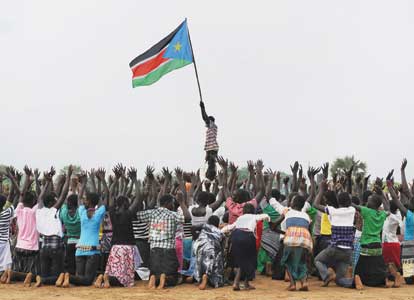
Independent was the very thing that the people of South Sudan ever wanted in the last five decades of the civil war in the former united Sudan. With one voice and as one people, South Sudanese all over the world overwhelmingly voted 98.8% in the January 2011 Referendum that led to the independent of the new African’s nascent nation of South Sudan. South Sudanese and their friends in one way or the other lost over 2.5million lives in quest for freedom, liberty and equality.
In the aftermath of the independent, South Sudanese started to come back to the Country from different places all over the world to build their new nation. During the war, some of the South Sudanese took refuge in different cultural settings to save their lives and that of their children from the merciless Sudanese Armed Forces and other militia groups instigated by the Khartoum government by the time. For example, some of the South Sudanese got themselves as displaced people in Khartoum and other cities in the north, exposing them to the Arab culture; others took refuge in East and Horn of Africa, especially, Ethiopia, Congo, Kenya and Uganda – adopting to secular cultural setup, and others went and adopted to the Western World’s cultures. These people were exposed to different cultural setups depending on where they took refuge.
When South Sudanese from all these different cultural setups came back to the new nation; it became a competition between these different mind-sets of who adopt to whose culture. This competition became the game and a big drama between South Sudanese that came from Khartoum and those that came back from the Horn and Eastern Africa. The tension between these two South Sudanese groups has been growing with each group claiming to be better than the other.
My personal advice to my fellow Countrymen and women, is that, we are all South Sudanese. It does not matter where we came from or which culture we adopted as particular group is better or not, but our patriotic stance in protecting our country from such turmoil is the most important thing to focus on. We must optimise on what each one of us have learned from where we took refuge and use it for building our new Country, the Republic of South Sudan. We are all South Sudanese despite cultural adoption.
Before the Government of South Sudan enforced the adoption of English as an official language in country, the transition from Arabic Language Curriculum to the English Language Curriculum in the schools was a hurdle to the change in public policy due to such drama between these two groups of South Sudanese. I recalled in 2007, the ten States in South Sudan were divided into such groups. Some of them had already heeded to the change in the policy while others were still starting new classes in Arabic Language. The whole policy of the Government of South Sudan was to phase out the Arabic curriculum, and replacing it with the English Language curriculum in our schools. That mean as from 2005, pupils and students who were in Primary one and Secondary Class one respectively were to continue in Arabic Language Curriculum until they phase out. New class ones were supposed to be in English Language Curriculum. It has been three years now from 2011, when the phase-out was supposed to have ended. But today, in Malakal, Upper Nile States, for example, some of the schools do still teach Arabic, and this is because of the great gap created by the competition between these two groups of South Sudanese. The effort on teaching Arabic Language Teachers in English has not been effective, and the willing to take on the English language by them has not been effective either. It is both sides to blame.
It still remains to the Government of South Sudan to regulate public policy that will address such created differences among our communities. It is a prerogative responsibility of each one of us to except change and to reunite as one people with one common goal of once again living in peaceful coexistence among one another in these country that we both been earning for.
We must all access employment opportunity in the new Public Service of the Republic of South Sudan. We have both acquired the same or distinctive skills and knowledge wherever we were all over the world during the war. Therefore, developing various economic and social sectors in our country is the role and responsibility of each one of us as a good citizens. It does not matter what you have done or what you went through. We both suffered the same humiliation in our struggle for this freedom that we both enjoy today in one way or the other.
Let us love one another, and join hands together to build our nascent nation of the Republic of South Sudan in peace and harmony.
Long live the people of South Sudan.
Long live the Republic of South Sudan,
God bless South Sudan.
 Empowered Citizens: Engaging in Policy and Participatory Governance
Well said Mr. Hakim, these are some of hate speeches that we need to eliminate in this Country
Absolutely, Awad